No Friend of Our Race

Andrew Johnson
Frederick Douglass

The lives of Frederick Douglass and Andrew Johnson tell the story of Reconstruction.Two conflicting visions of America confront us, then and now. Our ancestors planted the seeds of those conflicts when the first slave ships docked, but they bloomed in Reconstruction,

How does one person become a Black abolitionist and one person become a white supremacist politician in the context of the early 1800s? How did each of these men influence the Reconstruction of America? Might this kind of historical inquiry help us make sense of the present?

Frederick Douglass, former slave and passionate abolitionist, described the moment Andrew Johnson saw him in the crowd at Abraham Lincoln’s second inauguration, March 4, 1865. Lincoln had pointed out Douglass in the crowd. “A frown…of bitter contempt and aversion” came over Johnson’s face, said Douglass. “..it then changed to the bland, sickly smile of a demagogue”. Douglass turned to his companion and said, “Whatever Andrew Johnson may be, he is no friend of our race.” Only 41 days later, Abraham Lincoln was assassinated, and Andrew Johnson was president of the United States. Frederick Douglass’s words were prescient.
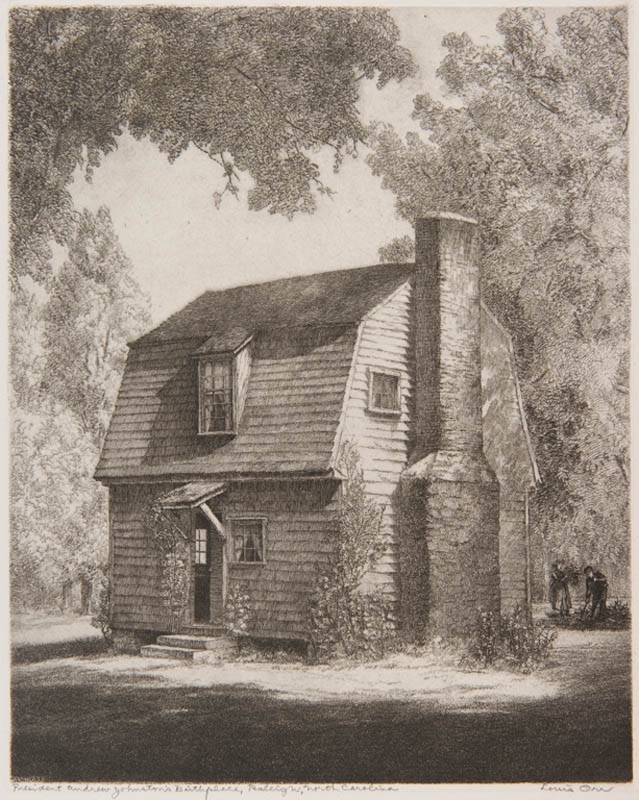
Andrew Johnson was born in Raleigh, North Carolina on December 29, 1808 to Jacob and Polly Johnson. His parent were illiterate and on the fringes of white society. Jacob Johnson died before Andrew was ten years old and his mother was unable to support them on the money she made as a washerwoman for a local lawyer. He was apprenticed to a tailor by the time he was ten years old. His mother had no other choice but to sell her son’s labor in order for the family to survive. Apprenticeships at that time were only a step above indentured servants, but at least Johnson learned a trade. More importantly he learned to read and was exposed to the ideas of tradesmen and townspeople who congregated in the tailor’s shop. Johnson began his own program of self-improvement here, and studied closely a copy of The American Speaker he was given by a visitor to the shop. Eventually Johnson escaped this life and wound up in Greenville, Tennessee at the age of 19.

Frederick Douglass did not know his exact birthdate but thought it to be in February, 1818. He was born on the banks of the Tuckahoe River on Maryland’s Eastern Shore and named Frederick Augustus Washington Bailey. We share a last name but, Douglass once pointed out that “genealogical trees do not flourish among slaves.” He lived with his grandmother and grandfather, Betsy and Isaac Bailey, on the plantation where his mother was enslaved. He rarely saw her.

When he was nine years old, Douglass was sent to Baltimore to serve as a slave to the Auld family where he was to be a companion to “Little Tommy”. Sophia Auld, the mistress of the house, treated Douglass more like a half-brother to Tommy, and gave him the greatest gift of his life. She taught him to read. At some point the master of the house became aware of this and sternly put a stop to it. Douglass reports that the white man’s lecture was an epiphany for Frederick, and described it as the first “antislavery lecture” he ever heard. Auld told Sophia that it was against the law to teach a slave to read and write. Throughout his life, dedicated to abolishing slavery, Douglass would repeat the words of his owner. “Learning would spoil the best nigger in the world”. Literacy became Douglass’ ticket to a new life. As a teenager in Auld’s household, Douglass would spend time in his kitchen loft reworking Tommy’s copybooks, copying worlds from the Webster spelling book, the Bible, and the Methodist hymnal. “Words had become his reason to live.” (Blight) Eventually he escaped in 1838 and arrived, after a long and harrowing journey, in New Bedford, Massachusetts. He was 20 years old,

Douglass and Johnson launched their adult lives at 19 and 20. One had escaped slavery and the other escaped extreme poverty and servitude. Douglass had the courage to board a ship in disguise and risk the imprisonment and beatings he would receive if discovered. Johnson braved the frontier of East Tennessee and Western Carolina to travel through the Blue Ride mountains for his new life. Frederick Augustus Washington Bailey changed his name to Douglass to avoid captivity in New Bedford, Massachusetts. Andrew Johnson settled in Greeneville, Tennessee and set about to become respectable.

New Bedford, Massachusetts was a whaling center and Douglass went to work as a laborer to take care of his wife who he married as soon as they arrived in New Bedford. They quickly had two children he had to support but he was also discovering newspapers and other publications that expanded his mind and his understanding of the abolitionist movement. During these first years he also found the AME Zion church where he rapidly became a leader and teacher. By 1841 he was discovered by white abolitionists who were amazed at the words of this self-made man and former slave. This began a 50 year career as a reader, thinker, writer and orator for the cause of Black people in America. Douglass’s influence culminated in Lincoln’s Emancipation Proclamation. Lincoln had his flaws, but Douglass knew Lincoln was the man of the hour for Black people. When he was assassinated, Douglass described his murder as a “great convulsion”. Later he would say that it was slavery itself, “in a last spasm of madness, that had murdered the president.”


 

New Bedford, Massachusetts


Blue Ridge Mountains

A decade earlier Andrew Johnson had arrived in Greenville, Tennessee. He set up a tailor shop in the southwest corner of East Tennessee, married, and began to integrate himself into the community as a respectable tradesman. His attraction to the world of ideas continued and he enjoyed listening to political debates. He became a good debater himself and was described as “aggressive” and a “bully” as his political beliefs crystallized. Always restless and desiring to climb up the ladder of success, he read voraciously and tried to compensate for his lack of education. Within two years of his residence in Greenville he launched a long political career. He was elected an alderman, then the mayor and eventually a state legislator. Later he was elected to the US House of Representatives. It was here he showed his debating and speaking skills around a “defining set of political beliefs. He continued to style himself as a champion of the workingman in opposition to society’s elites, and saw himself as the guardian of the public purse”. (Gordon-Reed). Johnson would continue his ascent that a contemporary would describe as “one intense, unceasing, desperate” uphill struggle. It would culminate in assuming the presidency at a crucial moment of American history.


Two Visions for a “New America”

They both were leaders, one’s power came as spokesperson for the abolitionist movement and the Black man, and the other’s power came from his election to government positions. They both were self-educated, voracious readers, and riveting speakers. They both had escaped lives that seem ordained for them to live. But they came to very different conclusions on the kind of society America should be. Only one of them could pass laws, use political power, and “make things happen” on the ground.

“Whipped Peter”

Douglass and Johnson’s deep differences have roots in their early experiences, just as ours do. Douglass expressed throughout his life the deep anguish of his years in slavery, His spirit and intellect were obvious by his teenage years and invoked the hostility and physical abuse of his masters. He was finally sent to spend a year with a farmer, Edward Covey, who made a living “breaking” slaves. “In this brutal environment, Douglass became a student of human nature, of the slaveholder’s mind, and the fullest meanings of human rights.” (Blight) Armed with this understanding, he fought back. After repeatedly defying Covey, the struggle erupted into what Douglass described as a two hour fight. It ended with Douglass on top of Covey with his hands on his throat, squeezing and drawing blood with his fingernails. Covey gave up and never touched Douglass again. Throughout his life, Douglass would describe this fight as the moment he became a man.

White writers and publishers, like William Garrison, now had a spokesperson who could go beyond abstractions to reveal the evils of slavery. Douglass claimed his right and the right of all Black people to be treated as human beings, not beasts of burden. He believed in the ideas set forth in the Declaration of Independence and the Constitution. Douglass only had power through his voice and ideas, but he used it to the fullest extent possible. His ideas and moral suasion would influence northern abolitionists, but Southern politicians also began to see the inevitable loss of slavery and their economic power.
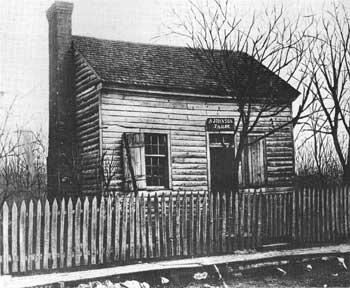
Johnson’s Tailor Shop in Greeneville, TN

Johnson had been humiliated, too, as a poor, white, boy, indentured (apprenticed) to a tailor in town. Townspeople felt free to speculate on his mother’s relationship with the man she worked for, so Johnson’s parentage was an object of speculation. This treatment likely bred deep resentments toward people with more money and status, and convinced Johnson to claim allegiance to the common man. As he entered politics, Johnson’s allegiance became loyalty to the common white man. The strength and perseverance that brought him over the Blue Ridge mountains, also made him stubborn and unwilling to compromise even with his own supporters. He did not advocate for abolition of slavery and argued that states had the right to decide their own such laws. Johnson refused to accept enfranchisement for Black people. In fact, when he was president, he was visited by Frederick Douglass and others, who encouraged him to grant voting rights to Blacks. Johnson refused and painted a picture of a country, if Blacks had power, where poor whites and Blacks would war with each other.. He resented the white planter class, but only on behalf of the white working man. He thought it essential for Black people to know their rank in the pecking order of society.

These deep, enduring differences around slavery and class were so intense that the United States exploded. The most modern estimate of the death toll in the Civil War was 750,000 Americans. After Robert E. Lee’s surrender at Appomattox, VA, the re-election of Lincoln with Johnson by his side, the reconstruction of the country could begin. Douglass and Johnson both listened to the words of Lincoln at his second inauguration.
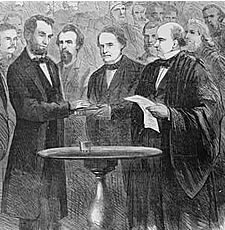
Lincoln’s Second Inauguration

“Fondly do we hope, fervently do we pray, that this mighty scourge of war may speedily pass away. Yet, if God wills that it continue until all the wealth piled by the bondsman’s two hundred and fifty years of unrequited toil shall be sunk, and until every drop of blood drawn with the lash shall be paid by another drawn with the sword, as was said three thousand years ago, so still it must be said “the judgments of the Lord are true and righteous altogether. With malice toward none, with charity for all, with firmness in the right as God gives us to see the right, let us strive on to finish the work we are in, to bind up the nation’s wounds, to care for him who shall have borne the battle and for his widow and his orphan, to do all which may achieve and cherish a just and lasting peace among ourselves and with all nations”

John Wilkes Booth also was present at the inauguration. His response to these words was the assassination of Lincoln 42 days later. Johnson assumed the presidency and began to restore, not reconstruct, the South.

This took all the abolitionists and Radical Republicans in the Congress by surprise. Johnson moved rapidly while Congress was on recess to bring back the Confederate states as soon as possible. He pardoned all the southerners who fought in the war except for the highest ranking. He took pleasure requiring the wealthy whites to to come to him and request his pardon. He restored lands captured by the Union during the war to their previous white owners. Some of those lands had been given to black families who were farming them. His actions denied Black people any opportunity to take care of themselves. All these steps resulted in the Confederate sympathizers to be reelected to governments. New constitutions were passed that essentially locked Black people out of a voting, land ownership, even moving around freely.

Douglass continued his advocacy of Black people’s right to be fully human with the same rights as white people. He convinced abolitionist to be vigilant and be sure another form of slavery was not instituted. Garrison’s abolitionist society actually thought the battle for equality was over after the passage of the 13th Amendment. Douglass set the convention of abolitionist straight,

They would not call it slavery, but some other name. Slavery has been fruitful in giving itself names. It has been called “the peculiar institution,” “the social system,” and the “impediment,” as it was called by the General conference of the Methodist Episcopal Church. It has been called by a great many names, and it will call itself by yet another name; and you and I and all of us had better wait and see what new form this old monster will assume, in what new skin this old snake will come forth.”
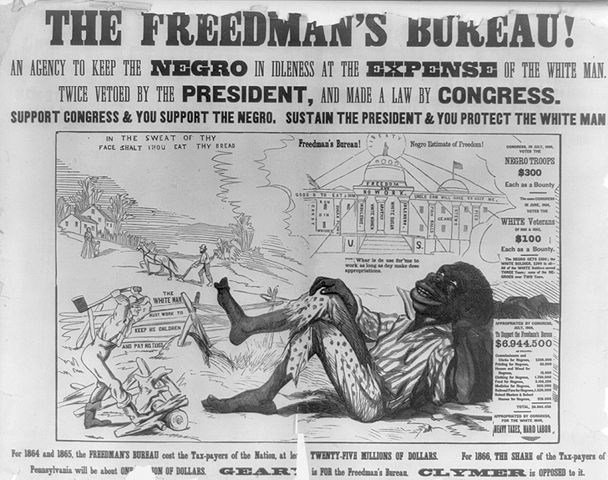
Douglass’s warnings came true. When Congress returned, it was able to pass legislation and Constitutional amendments that countered much of Johnson’s political moves. But there had been enough time for the white supremacy thinking to gain a hold again. Even after Blacks began to vote and elect Blacks in government positions, the resentments of white people festered. Northern allies who came south to help Blacks were characterized as carpetbaggers and scalawags who were supporting incompetent and ignorant Blacks. Efforts to fund and expand the Freedman’s Bureau to provide assistance and advocacy for Blacks in the south, were met with violence at times. The caricatures and propaganda used to undermine respect for Black people were successful for generations in creating the illusion of Blacks as ignorant and not ready for citizenship and leadership. In actuality popular laws were passed when Blacks briefly participated in government. The most influential legislation was free public schools for all children.

Despite Douglass’ efforts, eventually the northern Republicans got weary of the effort and the cost. Many decided that it would be best to allow the South to handle the problems, so Blacks would stay in the South. Whites in the South were provided the space they needed, and they began to use other tools to keep Blacks in their place. The KKK was born and by 1877 Blacks were forcefully locked out of common life once again.

Today

I started this historical inquiry as part of a journey to better understand why race is still such a divisive issue in our country today. Why do we continue to see this pattern of progress, backlash, and anguish? A few things have become very clear to me:

  • Racial prejudice is deep in the bones of America
  • Racism is a disease that starts its contagion at birth
  • White people must own their part in the spread of this disease
  • Overcoming the disease has to be done with intention, on purpose
  • Moral suasion, although important, will not get the job done
  • Power to change laws and policies is crucial
  • Governmental power is important, but not sufficient
  • Every institution in America is affected by the disease
  • Change Leadership across all social institutions is essential

The journey continues.
Remembering why I am doing this

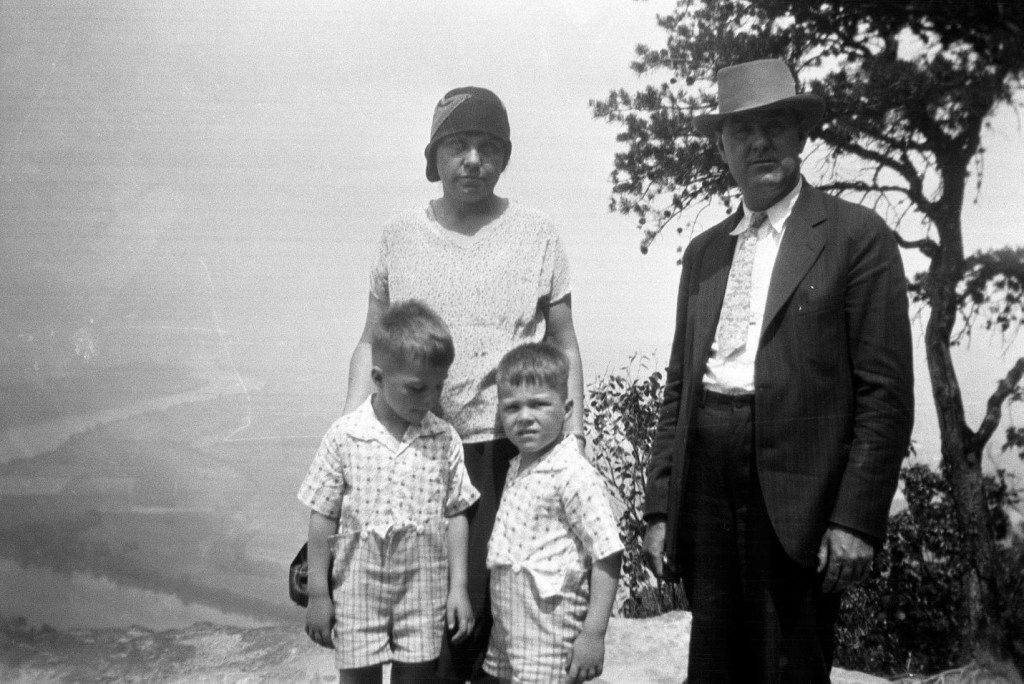
My grandmother, Ruth Gregory Bailey, with my grandfather, my father and his twin brother circa 1930

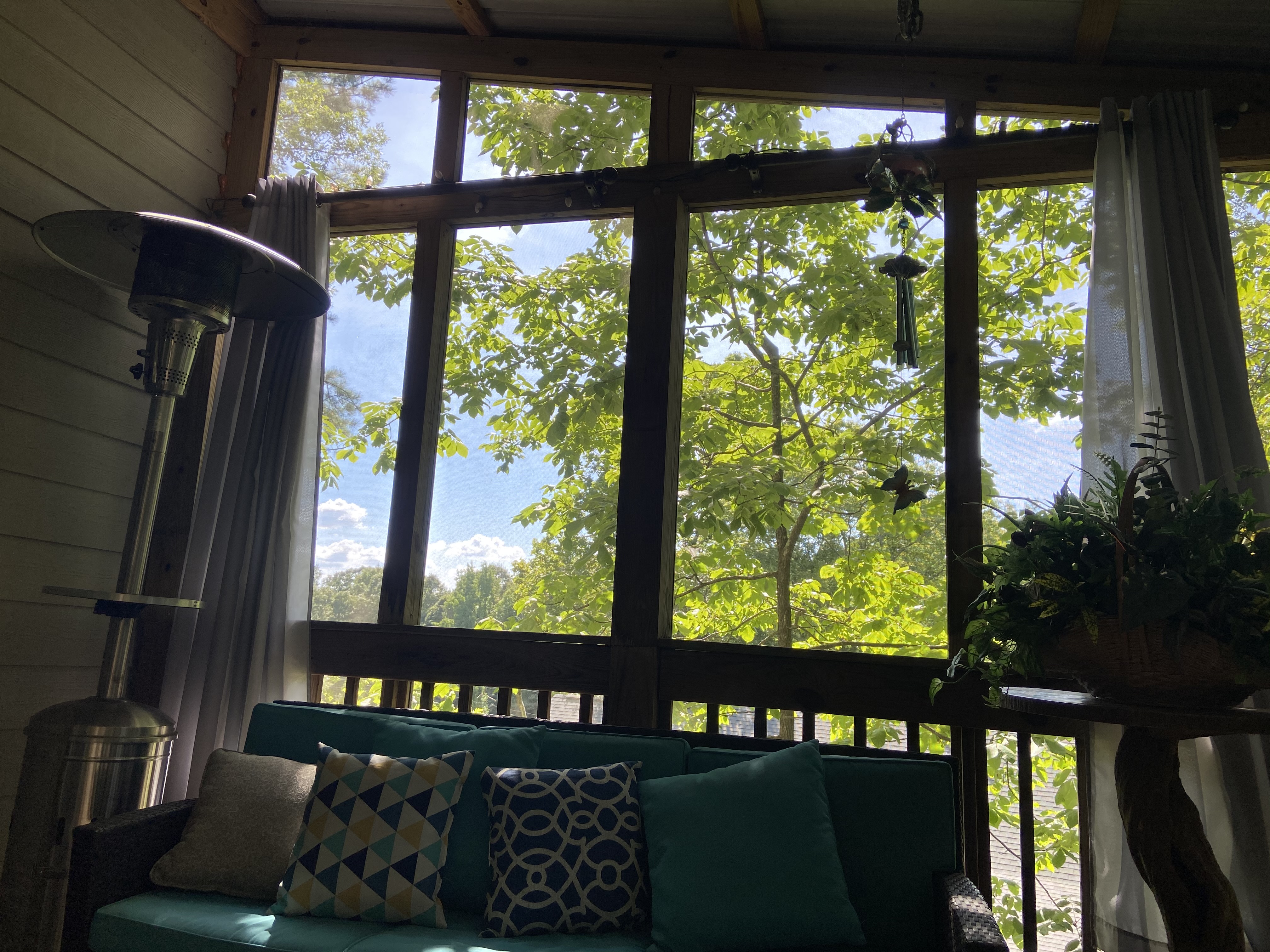
The back porch has become my spiritual and intellectual home during these days of isolation. On the intellectual side I am writing a comparison of two figures of the Civil War/Reconstruction era that I believe represent the conflicting images of what America is and what it should be. I want to understand fully the lives of these two men so it have taken more time than usual. It seemed appropriate to pause and reflect why I have created this project for myself. Where does that desire originate? With that question in mind, I wrote the following devotion.

He has shown you, O mortal, what is good.  And what does the Lord require of you? To act justly, and to love mercy and to walk humbly with your God.”   Micah 6:8

I am named after both my grandmothers.  Ruth is my middle name and belonged to my paternal grandmother.  She was a business woman, selling Spencer corsets door-to-door , during the 50’s and 60’s in Memphis, Tennessee.  Ruth Gregory Bailey always wore her product, and her hard middle and straight back were signs of her character. A lasting image for me is coming into the kitchen in the morning and finding her reading her Bible at the kitchen table. A devout Baptist, she was an active member of Calvary Baptist Church for the almost 70 years it was located at Euclid and Lamar, a block from her house. Walking to church with her, sitting at her side in her Sunday School class , and witnessing the regard her fellow members had for her, planted seeds of faith in her oldest granddaughter. Many years later, I would dedicate my dissertation to the woman who taught me to “hunger and thirst after righteousness.”

I fall way short of righteousness, but I still hunger for it. I take hope from Maya Angelou’s words. “Do the best you can until you know better.  Then when you know better, do better!” COVID times have highlighted several areas of our common life where we should “do better”.

The disproportionate impact of the COVID virus on Black people, the murder of George Floyd and many other examples of mistreatment, the persistent academic achievement gaps and the wealth gaps for Black Americans, have all come to a dramatic climax. During this time of isolation with less distractions, we have an opportunity to know better so we can do better.

 I have turned to Micah once again to provide some guidance.  He defines the righteousness my grandmother exemplified for me.  Justice, mercy, love, and kindness should be our goals right now and the substance of our contemplation. I pray for the courage to develop these qualities in my own life and to encourage others to do the same.

Dear Lord,

We hear Your call to do justice, to love mercy, and to walk humbly with You. Please show us where the seeds of justice need to be planted. Help us to show mercy and love to everyone, not just people who look like us. Forgive us for all the times we haven’t followed your call. Remind us of your awesome Presence in our lives, humble us, and stay close to us.  There is work to do and you have called us.

Amen and Amen

“I Feel Limited”

Reconstruction Part Two

“Every revolution has its counterrevolution – that is a sign the revolution is for real.” C. Wright Mills

The issues “central to Reconstruction are as old as the American republic and as contemporary as the inequalities that still afflict our society”.

Eric Foner Reconstruction:America’s Unfinished Revolution, 1863-1877

Recently I spoke with a Black friend about the Confederate statue that stands in the center of our square. “When you drive through town, what do you think when you see that statue?” “I feel limited. It says to me that there are limits to what I can ever accomplish.”

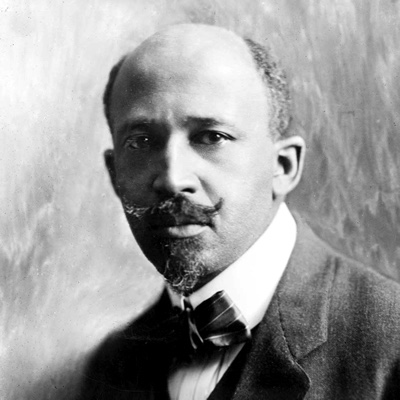
W. E. B. Du Bois

Those words would be very familiar to W.E.B. Du Bois. Dubois was born in 1868 in Massachusetts and was educated at Fisk University and a PHD from Harvard. One of the founders of the NAACP, he was a scholar in languages, economics and history. His book, Black Reconstruction in America: 1860-1880 , published in 1935, countered the historical analysis of the day and created a storm amongst white historians. His voice was ultimately dismissed. It wasn’t until the 1960’s that his description of Reconstruction began to overthrow the conventional wisdom.

Du Bois, as Eric Foner would do in 1988, put Blacks in the center of the story of Reconstruction. He argued that it was black laborers in the South and abolitionists in the North who ultimately brought about the Civil War. The Northern abolitionists and the underground railroads of Harriet Tubman and Josiah Hensen were a “safety valve” for slaves who began to escape to the border states. This was a huge economic loss to the Southern planters and they could see the end of slavery if they did not take action. They chose secession and war to keep their valuable property. In the years of Reconstruction after the war, the struggle continued as Blacks persisted in moving forward and upward with the initial help of allies in the North. If their efforts had not been so violently hindered, perhaps the statue would not be there today.

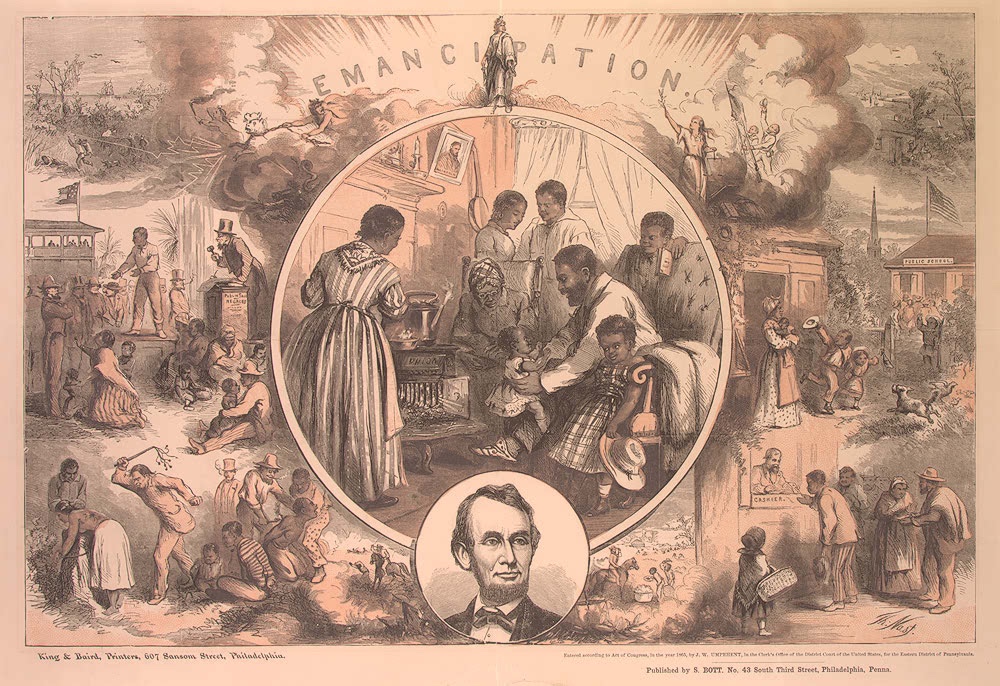
Odyssey of Freed Slaves in The South Library of Congress

A timeline

In order to see the connections between the tumultuous events of Reconstruction and the racial justice issues of today, a timeline may be helpful. Kendi, Guelzo, Foner, and Du Bois helped me create this one.

  • 1863. Emancipation Proclamation (Foner dates Reconstruction from Lincoln’s action)
  • 1865. April 9. Lee’ surrender at Appomattox was the beginning of the end
  • 1865. April 15. Abraham Lincoln’s assassination
  • 1865. May 29. Andrew Johnson, newly inaugurated, issued his Reconstruction Proclamation which pardoned all but the highest levels of Confederate officials. The Confederates immediately elected their sympathizers to the constitutional conventions and passed Black codes that essentially created a South very similar to the one before the war. Even though the 13th Amendment had been passed and barred slavery, Kendi quotes a Black veteran who said,”If you call this freedom, what is slavery?”
  • 1865. December 18. The 13th Amendment officially added to the Constitution. Slavery was outlawed.
  • 1866. A coalition of Radical Republicans and moderate Republicans (Kendi labels this group as “Anti-Black” for reasons of their self interest in keeping Blacks from fleeing North) were able to push back on Johnson’s actions and move Reconstruction in another direction. They overrode vetoes and passed two key pieces of legislation.
    • Extension of The Freedman’s Bureau
    • Civil Rights Act of 1866
  • 1866. The coalition group passed 14th Amendment (ratified in 1869)
    • Major change to how the Constitution would be applied in our country
    • Citizenship clause (gender appeared for the first time)
    • Due process clause
    • Equal protection clause
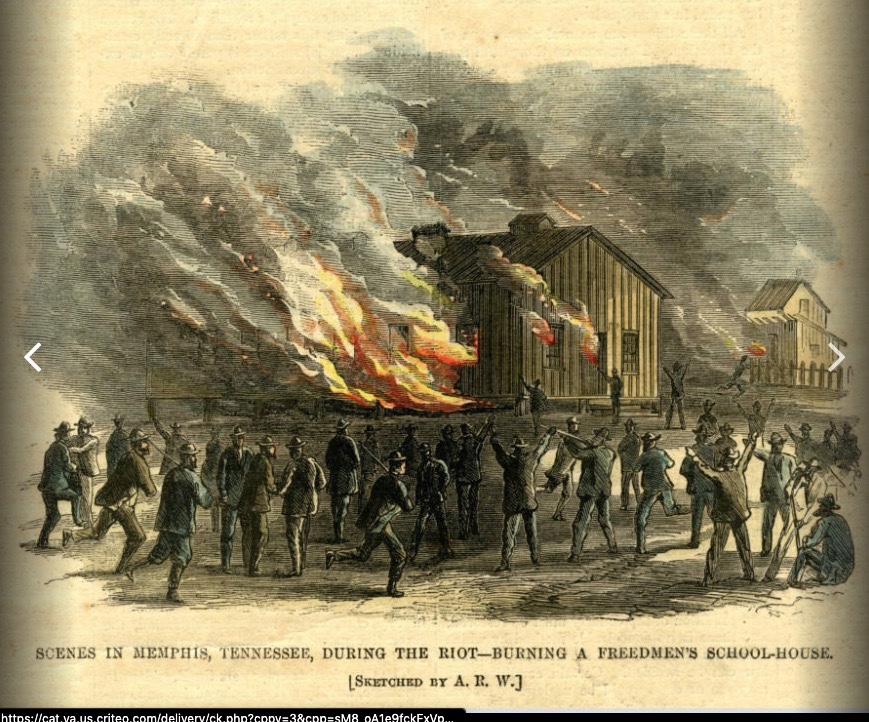
  • 1866. May: Memphis white mobs killed 48 Blacks and gang raped at least five Black women (Kendi, Foner, Guelzo all confirmed this information)
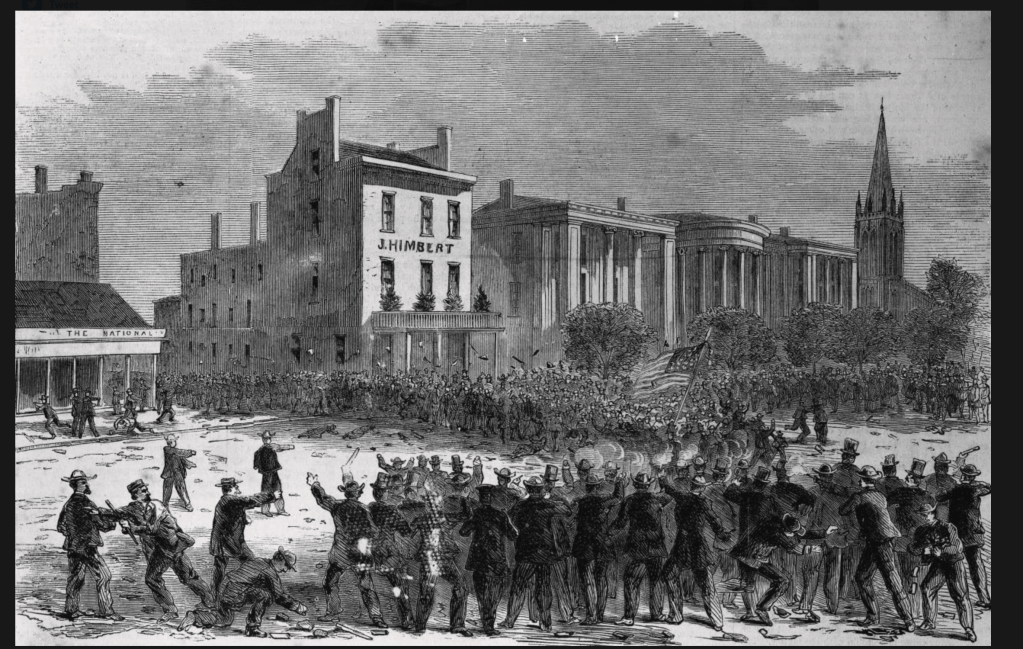
  • 1866. May: The Louisiana governor endorsed the Radical Republican plan to reconvene the Constitutional convention to give Blacks the right to vote and to keep those who fought in the Civil War(the “rebels” from voting. At the convention attended by many Black soldiers, fighting in the street broke out. New Orleans police killed 34 Blacks and 3 radicals in what General Phillip Sheridan called “a massacre”.
  • 1867. Klu Klux Klan began their reign of terror
  • 1867. New state constitutions were required for readmission to the United States
  • 1867-1869. State constitutional conventions were held
  • 1869. The 15th Amendment was passed
    • Race could not be used to deny a man the right to vote

Ramifications

The ramifications of Reconstruction are dramatically displayed In this abbreviated timeline and the images. The leniency of the President and the radical actions of the Congress set up another war, one of moral, economic, and political issues. The Reconstruction period would not end until 1877 (Foner). There were more events to be noted as well as characters, Black and white, who played important roles. The world turned upside down for everyone in the South, and the nation itself would also never be the same.

“Over a century ago, prodded by demands of four million men and women just emerging from slavery, Americans made their first attempt to live up to the noble professions of their political creed—something few societies have ever done. The effort produced a sweeping redefinition of the nation’s public life and a violent reaction that ultimately destroyed much, but by no means all, of what had been accomplished. From the enforcement of the rights of citizens to the stubborn problems of economic and racial justice, the issues central to Reconstruction are as old as the American republic, and as contemporary as the inequalities that still afflict our society.” Eric Foner, Reconstruction:America’s Unfinished Revolution, 1863-1877.

Musings from the Porch will continue to explore Reconstruction and its issues, personalities, and themes in the days ahead.

Reconstruction Part One

In 1907 a statue was erected on the courthouse lawn of a college town in North Mississippi. A Confederate solder gazes south across the town square, down South Lamar Avenue toward the countryside of Lafayette County, Mississippi. It stands less than a mile from William Faulkner’s home.

In the middle of a pandemic that has caused disproportionate harm to Black people, we saw the killing of more Black people by white policemen. This has sparked renewed scrutiny of the statue in the center of our town. The picture above was taken Saturday, August 8. The protestors are a fairly good representation of how White people feel about the statue. Indignation is there on the one side and resistance to its removal on the other.

The front panel reads: “In memory of the patriotism of the Confederate soldiers of Lafayette County, MississippiThey gave their lives for a just and holy cause.”

The back panel reads: “..the sons of veterans unite in this justification of their fathers’ faith.”

The statue is a cultural symbol. Anthropology teaches us that symbols are forms through which people express meaning. Symbols of all types (art, language, stories, etc.) are ways that the culture transmits the acceptable forms of behavior and attitudes within a community. Symbols are not accidental. They are meant to convey a message.

Were I protesting last Saturday I would have been standing with the young man on the left. But while musing on the back porch, I keep returning to a key issue for me, “what meaning do Black people attach to that statue”. I am a white Southerner with roots in the Mississippi Delta, the Appalachian yoemanry, and the upcountry of South Carolina and Mississippi. I am indignant that a Confederate statue is in the center of town, but right now Black Lives and Black feelings are what matter to me.

Kendi’s Stamped From the Beginning reveals that the statue’s meaning might not have as much to do with slavery as I thought. The events of Reconstruction may have a stronger connection to it today. Reconstruction ended around 1877 only 25 years before the statue began its vigil on the square in 1907. After the humiliation and defeat of the Civil War, Whites were back in power and were determined to stay there. How they managed to regain their power is the story of Reconstruction. It has much to say about this statue and life in this community today.

I needed sources to tell the story. I found them at another symbol of our college town, Square Books. Ironically this depository has its main store directly across from the statue, but the books on the shelves provide another picture of the “just and holy cause”. All summer my library has grown to include the history, psychology, sociology, and literary foundations of race in America. To fully understand the statue and Reconstruction, we must put Black people at the center of the story.

Around the time the statue was constructed, William Archibald Dunning began to publish his historical analysis of Reconstruction. His ideas and those of his students became the prevailing interpretation until the 1960’s. This story was the one I learned in the fifth and sixth grade in Orlando, Florida. By that time, the story had sunk into the consciousness of White southerners and has stayed there for many,. White people were in the center of that story.

The story I learned went something like this. The Civil War ended and the South accepted the reality of defeat. They were ready to provide justice to their former slaves and desired to become, once again, part of the United States. Abraham Lincoln’s plans for Reconstruction were generous and, after his assassination,
Andrew Johnson began implementing those plans. A group of Republicans set out to undo all these altruistic plans because they hated the Southern rebels and wanted to consolidate their own power. They passed laws that dismissed the white governments of Johnson and allowed black suffrage to give those roles to Black
people. Carpet baggers and scalawags flooded to the south to spread all kinds of corruption and turmoil. Blacks were unprepared, were ignorant, and unable to govern. The South descended into chaos. Finally the white community had no choice but to band together and take over once again.


“ The former field hands found themselves suddenly elevated to the seats of the mighty. There they conducted themselves as creatures of small intelligence might naturally be expected to do. Like monkey’s or small children turned loose among treasured objects whose value is beyond their comprehension, they ran
wild—either from perverse pleasure in destruction or simply because of their ignorance.” Margaret Mitchell, Gone with the Wind, 1936 and 1964. Quoted in “Lies My Teacher Told Me: Everything Your Textbook Got Wrong, James Loewen, 1995


Although it was difficult to even type those words, I am struck that I loved Gone With the Wind when I was 13 and living in Starkville, Mississippi. My mother allowed me to read the book that others considered scandalous. Scandalous due to the drama and the love scenes, not the racism! I swooned over Rhett Butler, was shocked at the “Frankly dear, I don’t give a damn”, and was totally unaware that this depiction of Black people was racist and not even accurate.

Eric Foner in Reconstruction: America’s Unfinished Revolution 1863-1877, narrates a different story. His work is actually a continuation of W. E. B. Du Bois’ Black Reconstruction in America 1860-1880 published and ignored in 1935. They both put Black people in the center of the story and depicted them as far more than victims or problems.


Reconstruction holds the same moral, emotional, and cultural themes that we see in play today. Perhaps it
can also hold some answers. More musings tomorrow.

References:

Eric Foner. Reconstruction: America’s Unfinished Revolution

Ibram Kendi. Stamped from the Beginning: A Definitive History of Racist Ideas in America

W.E.B Du Bois. Black Reconstruction in America

James W. Loewen. Lies My Teacher Told Me:Everything Your American Textbook Got Wrong

So much to study on Reconstruction

I am deep into the topic of Reconstruction. The events, personalities, and issues speak loudly to us today. In 1871 the U.S. Congress took testimony to document the KKK’s violent response to Reconstruction. I want to share the words of those who suffered that violence. Black legislators made some inspiring speeches at the state and national level and I want to share their words. It will be next Monday before I post again, but I share these words from Eric Foner from his definitive work on Reconstruction. These are from his first edition of Reconstruction: America’s Unfinished Revolution in 1988.

“Over a century ago, prodded by the demands of four million men and women just emerging from slavery, American made their first attempt to live up to the noble professions of their political creed—something few societies had ever done. The effort produced a sweeping redefinition of the nation’s pubic life and a violent reaction that ultimately destroyed much, by by no means all, of what had been accomplished. From the enforcement of the rights of citizens to the stubborn problems of economic and racial justice, the issues central to Reconstruction are as old as the American republic, and as contemporary as the inequalities that still inflict our society.”

The Ladder Part Two

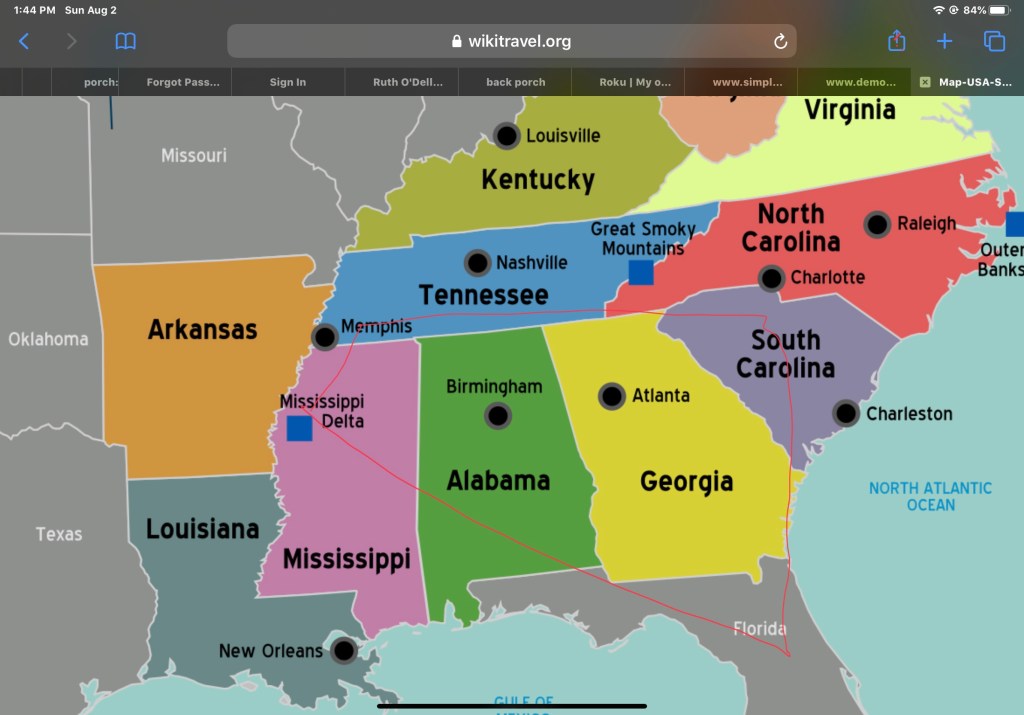
My South

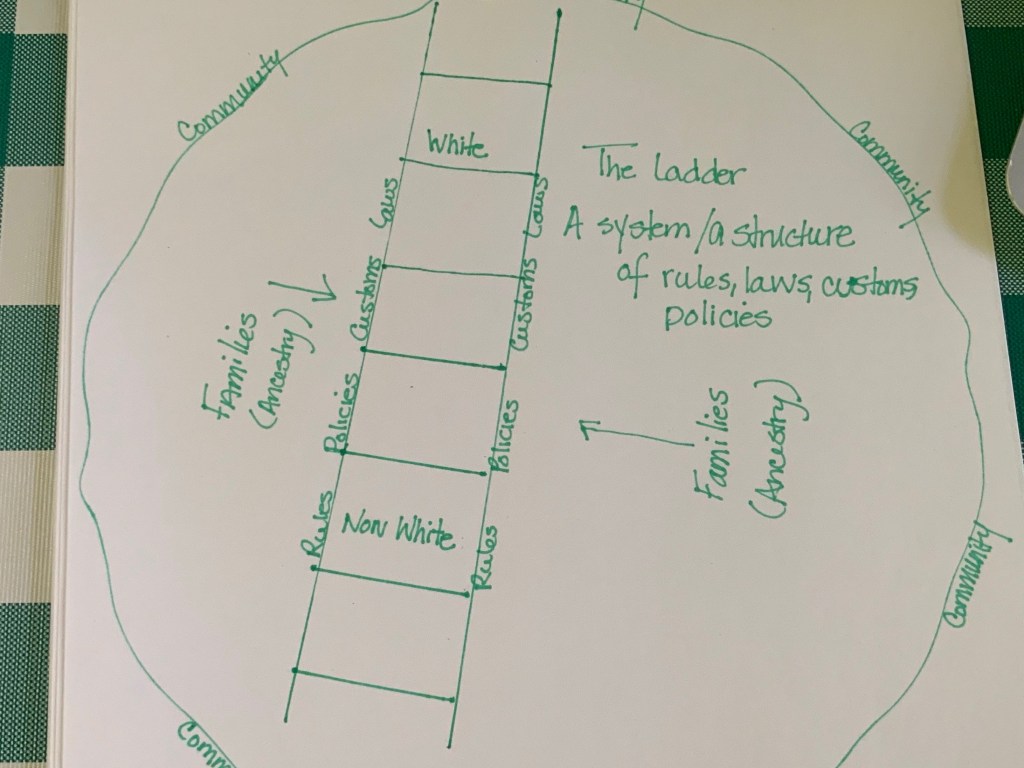
The South is my home even if I don’t always feel at home in it. The voices and experiences that stamped me were within a lopsided geometric shape connecting Memphis /Mississippi, South Carolina, Georgia and Florida. All of these states were members of the Confederacy and slavery was deeply embedded in the economy and culture of the region. The ladder was sturdy and clear with white people firmly in charge and Black people banned from the ladder. They were possessions of the people on the ladder. After the Civil War and the south’s defeat, the ladder was briefly dismantled but not destroyed. After reconstruction and a period of Black participation in government and public life, White southerners were able to reassemble the ladder with laws, policies, and rules that kept Blacks on the bottom rungs.

My model

Blacks were enslaved 246 years before the South surrendered and the 13th amendment was ratified in 1865. By May of 1865 Andrew Johnson was president after Lincoln’s assassination in April. His plans for the Reconstruction of the South reflected his belief in states’ rights. Therefore all the land confiscated by the Union army and distributed to freed slaves were given back to their prewar owners. The South was given free reign to reconstruct itself. Kendi called it “reconstruction of slavery.”In South Carolina, my paternal grandmother’s birthplace, Edmund Rhett was an editor of the Charleston Mercury. He wrote a letter to a politician and outlined a plan to manage the “negro problem” that later would be enacted as Black codes across the former Confederacy. In Mississippi, my current home, the legislature hurried to enact these codes. By November, 1865 a collection of laws began to pass. Blacks would be fined and could be arrested if they were found to be without employment or a home. Blacks were paid only at the end of a term of employment and if they quit before the term ended, they would not be paid. They could not own land except within incorporated towns so farming was not an option for them. If they could not pay a fine they could be hired out to a White person who agreed to pay their fine. Blacks could be arrested for a long list of very vague actions that amounted to free reign of Whites to rule. During this time before Radical Reconstruction, Whites frequently acted out against programs for Blacks funded by the Freedman’s Bureau.

A schoolhouse for Black children is burned by a white mob in Memphis, Tennessee in 1866

Today it is difficult to remember that the Republican Party was the party of Lincoln and the Democratic Party dominated the South. Andrew Johnson was a Democrat before the Civil War and ran with Lincoln on a Union Party ticket in 1864. The ticket was supported by the Republican Party and War Democrats. Although he believed in preserving the Union and waging war to be sure it was preserved, his states’ right sympathies were with the South. This set up an inevitable conflict with Republicans that led to his eventual impeachment. In the meantime the Republicans responded to his reconstruction program with a much more stringent set of policies that came to be called Radical Reconstruction. The South was temporarily divided into 5 military districts and required new constitutions to organize universal male suffrage. The states had to ratify the 14th amendment that required due process and a broader definition of citizenship. Later in 1869 the 15th amendment was enacted that protected the right to vote from any interference “based on race, color, or previous condition of servitude.” The most severe Black Codes in Mississippi and South Carolina were never implemented. The South entered a short period of progressive legislation and the participation of Blacks in public life. It was over by 1877.

What I have learned from Ibram Kendi, helped me view these historical events as reflective of the driving force of self interest. It was in the interest of White southerners to create laws, rules, and customs to be sure that even though they must allow Blacks on the ladder, Blacks were confined to the bottom rungs. It was in the self-interest of the North to pass the 14th and 15th amendments so that Blacks would stay in the South, not for moral reasons. This force of self -interest continues today. On Thursday I want to delve more deeply into Reconstruction because I think it teaches us something about today.

The Ladder

As I yearned to find my voice and a different path in my life, I was constantly influenced by the family and community around me. When I found my own voice, I  paid a price.  When I did not find my voice, others paid a worse price.   Today I wonder what makes that counter cultural behavior so difficult, particularly around race in America. Race has been a significant factor in the institutions I have encountered.  I have seen blatant racism and subtle racism in both the arenas where I have operated over these years: the school and the church. These institutions are pillars of our society. I have had status in both and, sadly, know very well they have not fundamentally changed because of whatever efforts I have made. Ibram Kendi provides insight into the construct of race that is important to understand in combating racism.  It has opened my mind to a new understanding.

 Kendi describes race as a power construct.  An image of a ladder has developed in my mind as I read.  Race has been used to construct a ladder in the psyche  of our country.  At birth we take our place on that ladder according to our race.  White people occupy the upper rungs and set the angle of the ladder. Whiteness is considered normal, standard, the way things should be. Nonwhite or people of color assume their rungs at birth as well.  They occupy the lower ones. As we navigate our lives we go up and down on the rungs and frequently our race intersects with other constructs such as gender, sexuality, and income, but race determined where we started.

The origin of the ladder lies in the self-interest of those in power across Europe in the 1400s. According to Kendi’s extensive research, Prince Henry of Portugal was fascinated by stories of riches to be had in Africa. Eventually he saw a market for African slaves and Portugal began their slave trade by way of the sea. Because the slave trade for the Slavs of Eastern Europe dried up, the market for African Slaves began to boom. “Slavs” became slaves and slaves became Black. Ultimately 12.5 million Africans would be brought to the Americas. 596,000 of them would arrive in the United States between 1451 and 1870. From 1805-1860 the number of slaves grew to 4 million and 23% of the United States’ population.

Kendi maintains that this enslavement of Africans produced racist ideas.  The ideas did not come first. Therefore, slavery was not started by racist people or racist ideas. It began because of the self-interest of Europeans. Racist ideas grew up around a justification for slavery.  Racist ideas like “lost souls”, “beasts”, “ignorant”, “evil”, and “lazy” were propagated by men who wanted to convince others to buy their slaves and enrich the sellers.  This backwards design of racism developed by Kendi is much different that I had ever considered.  I have always believed that racist people created racist policies, laws, and customs. Kendi has shown me a different way to think of it.

The ladder I envision is constructed by policies, laws, and rules that have been created over the years.  The ladder itself has set in motion the social-emotional factors, the attitudes and values that have kept the ladder in place.  These factors are the forces that make it very difficult for individuals to abandon the ladder.  Those on the bottom rungs face significant fears and losses if they climb toward the top rungs.  Kendi described his awareness of the ladder this way:

On the day when his parents took him to visit a parochial school for upwardly mobile black students,  this seven-year-old challenged the teacher “Why are you the only black teacher?” Kendi describes what had happened to him.  “In that classroom, on the April day in 1980, my parents discovered that I had entered racial puberty.  At seven years old, I began to feel the encroaching fog of racism overtaking my body.  It felt big, bigger than me, bigger than my parents or anything in my world, and threatening.  What a powerful construction race is-powerful enough to consume us. And it comes for us early.”

Therefore,  letting go of the ladder sends one out in a space that seems without support, but trying to climb toward whiteness means turning your back on your own culture.  On the other hand, those on the top rungs know they will sacrifice their connection to normality, to the standard, and even people they love.  The ladder, as James Baldwin says with eloquence, damages everyone on it.

Stamped by Voices

This is my mother around 1948-1950

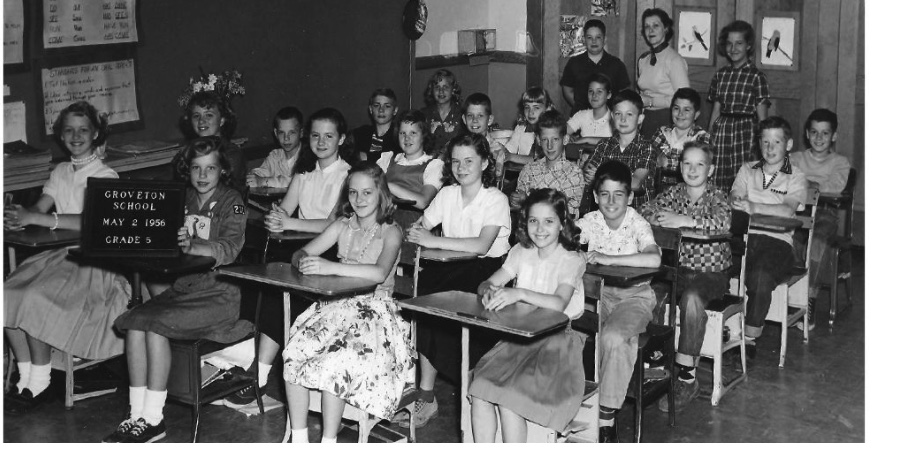
This is not my classroom but one very similar to it in 1958 In Atlanta, GA
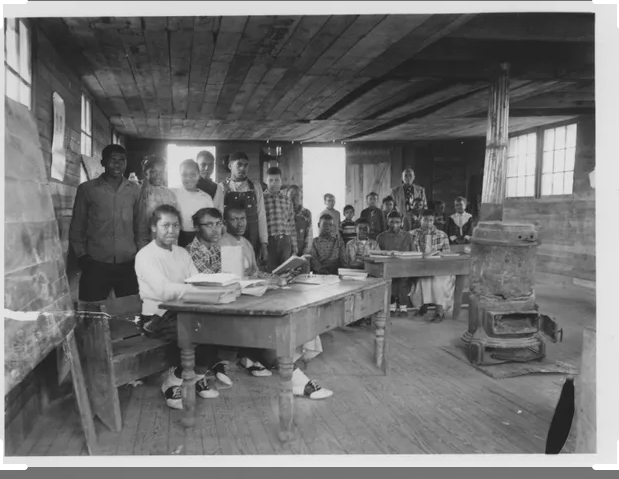
The Clarion Ledger captioned this as Mississippi Public Schools in 1956.

Stamped by Voices

Artists of all kinds have used self-examination for a long time to express how they became who they are and to challenge those who participate in their art.  James Baldwin used his self-examination to better understand why America could not come to terms with the race problem. Eddie Glaude, Jr., summarized Baldwin’s effort to “plunge beneath the surface of the race problem and examine our interior agreement with ways of thinking that trapped us….”.  We are not born with ways of thinking but these interior agreements start with the voices of our parents and their parents and their parents. That process is replicated many times over throughout the families of our communities and our country. Therefore, the voices of the community hold substantial power over the individual voice.

Jefferson Davis stood to make a speech in the US Senate in April, 1860.  He was the senator from Mississippi and would become the president of the Confederacy.    Davis was speaking against a bill to fund Black education. Ibram Kendi described it in his first book.  The senator maintained that “the bill was based on the false notion of racial equality.  The United States was built by white men for white men, he said. The inequality of the black and white races “was stamped from the beginning.”  When my ancestor, Stephen D. Johnston signed the Mississippi Secession Decrees the next January,  Davis’ voice was likely echoing in the convention hall.  That phrase became the title of Kendi’s first book on the history of racism in America. Eddie Glaude, Jr. would call that notion of inherent inequality “the big lie” that continues to trap our country.  To read Kendi’s book, Stamped from the Beginning,  is to hear all the voices of the past reverberate down the centuries.  Aren’t we all, then, stamped from the beginning?  What voices stamped me?

Agnes Margaruite Johnston, Stephen D. Johnston’s great-granddaughter,  was a force of unmatched magnitude in our family of four.  Her voice still penetrates my thoughts long after her death.  Even the word “voice” implies power.  The vibration of our vocal cords produces our speaking voices.  Writers  strive to find their voices. People protest to have their voices heard. Voices are powerful. Our parent’s voices are particularly powerful.

She was called Peggy by her family and friends.  She pronounced my name with a lilt at the end as if asking a question. She stood five feet. Her skin was flawless, and her hair was red from the time I could remember.Petite with expressive eyes, she loved clothes, parties, and having fun.

Animated and busy unless she was asleep, my mother cleaned the house to  such high standards that my sister and I felt like we were visitors in a hotel. “Never, never, never sit on your bed.  You will ruin the mattress”.  No posters were hung in our rooms, we never chose a piece of furniture.  If you messed up the room, she would mysteriously appear to clean it.  I think it was more like living on a cruise ship.

Her voice  ruled us all and painted a vivid picture of how women should lead their lives.  She never left her bedroom without her make up ready for the day.  It was not unusual to find her vacuuming replete in her peignoir.  Mother had  an outfit for even the most mundane activity like grocery shopping, exercising, or playing bridge.  She maintained that she did not perspire! In the south my mother would be described as a steel magnolia. Woe to anyone who went “lacking” in manners, dress, use of the “English language”, and, without a doubt, discretion!  If anyone in her sight  failed to adhere, regret would surely follow.  Her voice, often behind a mask of Southern gentility, would reveal itself and , “she could make a grown man cry.”.

“Mama, look, there is a lady that looks like Fanny!” “She is not a lady, honey.  She is a woman.” With those ten words about our African American maid, my mother introduced me to racism.  In second and third grade Mrs. Elyea was my teacher and she taught Georgia history with a flair.  There were no Black children in my school. In the 1950s.   In the third grade, I narrated our class play which had two parts.  Part one consisted of the Uncle Remus stories and Part Two was the Civil War battle of Atlanta. We took a field trip to Joel Chandler Harris’s home to see where Uncle Remus lived in the back yard. Supposedly he told his stories in that shack.   At some point Mrs. Elyea told us that there was nothing civil about the Civil War and we were to call it the War Between the States.  Clearly white people had been treated wrongly in the War Between the States and Black people told wonderful stories and lived in shacks and were happy about it. By the end of elementary school, I had a thorough understanding of a white woman’s place in the South.  If I were to exhibit behaviors counter to what I had learned, I would have to find my own voice.

Cora Givhan heard voices, too. I was born in Memphis, Tenn. in 1950 and Cora was born in Pontotoc, MS in 1947. That was a distance of 100 miles,  but two different worlds. Cora Givhan (Ingram) grew up in Pontotoc, MS and her father was a sharecropper.  She went to a segregated school system and would until she entered University of Mississippi. In her memoir, Sharecroppers Daughter: Wit Country Ham and Red Eye Gravy, Buttered Sugar Biscuits, Cheese and Eggs, Cow Milk, Homemade Ice Cream and Sweet Tea, she shares memories, too.  While my mama was telling me that black women were “not ladies” a white man called Cora’s mama, “auntie”.  Later an angry Mrs. Givhan told her daughters she wanted to ask the man, “Now which one of your momma’s sisters am I?”

Many years later, Cora’s brother Sam would describe their mother to me as an “intellectual without books.”  In a speech he gave at Cora’s retirement from Grenada School District, he held up their mother, Katie Mae Mallory Givhan,  as a force in their lives.  “an 8th grade scholar, mother of twelve, farm-wife, who came to Grenada awed, humbled, and amazed, the trip-of-a lifetime in 1958 or 59, the delegate from her rural church congregation attending ‘the conference’.  She made her scrapped up wardrobe, stayed in the home of host-family, took notes, and held her own, speaking about it at home before reporting on it to her home congregation.”  Cora would become a fighter on many fronts, as a Methodist minister, a special education teacher, a divorced, single parent, and non-profit director.  Sam would integrate Pontotoc High school and earn a PHD.  The “8th grade scholar” stamped them as much as my mother stamped me. But all three of us would have to find our voices to manage the real world.

Thirty years later Ibram Kendi ‘s parents had left behind their roots in the urban projects of the North and the rural poverty of the South.  They had embraced the idea that Black culture was the real enemy not racist policies. Kendi grew up hearing voices, too.  “Education and hard work will lift you up and the rest of the Black people with you.” They adopted a philosophy of Black self-reliance. His parents wanted to enroll him in a Black parochial school that would separate him from the very Black kids the white parents tried to avoid.  He visited a third-grade classroom with his parents. The teacher they visited was Black, but the pictures on the doors of the classroom revealed that most of the teachers were white and all the children were black.  He had been reading a long list of biographies of Black leaders like Martin Luther King, Ida B. Wells, and Frederick Douglass.  In that moment in that classroom it all came together,  and he recognized racism. Kendi blurts out “Why are you the only Black teacher?”  

The voices of our parents shape us.  Their voices continue to provide a backdrop, a context, a depository of attitudes, values, and prescriptions that weave their way into all facets of our lives.  Even when we desire to listen to other voices, find our own voice, and live a different kind of life, the force of those first voices are difficult to ignore.  Unless your voice mirrors the culture at large, success will come at a great price.  I will discuss the price we pay on Thursday.

Books referenced ( these are not in scholarly format!)

Sharecroppers Daughter: Wit Country Ham and Red Eye Gravy, Buttered Sugar Biscuits, Cheese and Eggs, Cow Milk, Homemade Ice Cream and Sweet Tea    Cora Givhan Ford (Ingram)

Stamped from the Beginning      Ibram Kendi

How to Be an Anti-Racist              Ibram Kendi

Begin Again                                      Eddie Glaude, Jr.

“Telling the truth about the past helps cause justice in the present. Achieving justice in the present helps us tell the truth about the past.” James Loewen

My great, great grandfather Johnston signed Mississippi’s Declaration to Secede the Union. In January 1861, Stephen Darden Johnston represented DeSoto County as a delegate to the Mississippi Secession Convention. He lived no more than 50 miles from where I now reside. I was always told that my mother’s father, grew up on a plantation in Nesbitt, Mississippi, but I never thought much about it. The document his grandfather signed sums up the “holy and just cause” that is memorialized in the Confederate monuments still displayed all over the South. “Our position is thoroughly identified with slavery, the greatest material interest of the world.” My great, great grandfather owned 55 slaves. I now know that my family enslaved 55 human beings and fought a war to protect that right.

I discovered this historical fact on my back porch this summer, 2020, and I don’t think I will ever see the world quite the same way. Inspired by the words of James Loewen, my time on the porch this summer has been spent researching the past, the country’s and my own. 

I started with Jill Leflore’s These Truths: A History of the United States. LeFlore described how often slavery was an issue between the colonies and states from the Revolutionary War through the Constitutional Convention and eventually the Civil War.  The struggles of today are not new and the seeds were planted long before there was a United States.

The first documented Africans arrived in the American colonies in 1619.   They came as slaves, bound in shackles and traveling across the Atlantic Ocean in the holds of ships.  Later this journey would be called the Middle Passage.  It all began long before their arrival here.  According to the Harvard Business School chronicle of African Americans, the Transatlantic Slave Trade began in the 1500s connecting Europe, Africa, and the continents of North and South America.  The slave trade became integral to the economies of all these countries.  Before slavery was finally abolished, 12.5 million Africans would be forcibly transported to the Americas.  These are the ancestors of the Black people who are now called American,  just as I am.

My ancestors, Baileys, Johnstons, Gregorys, Costigans, Clyburns, Mounts, and Poors, immigrated voluntarily from Ireland and Scotland.  They settled in South Carolina, Mississippi, and Tennessee.  Only the Costigans stopped in Illinois before settling in the Mississippi Delta.  By the time I was born in 1950, 330 years had passed since the first Black people entered bondage in this country, and probably 250 since my ancestors began new lives in a land they saw as opportunity

I was born and reared, an expression my mother used, in the South. I have lived all of my 70 years in the cities and towns of this region; I have grown up enmeshed in its culture.  One definition of culture is “how things are done around here.”.  Psychologists and sociologists maintain that the way we relate cooperate, and treat others is highly influenced by the culture handed down to us from our families and ancestors.

It would be dishonest for me to even attempt to view the world from the same lens that my Black countrymen see it.  The best I can do is read and listen to how they describe what they see.   I can, though, examine more closely how I see the world and how I have become the person I am. A comparison of these two voices may show me a new way, a new path, toward reconciliation and reformation. That is my hope.

Sources:

James Loewen              The Confederate and Neo-Confederate Reader

Jill LeFlore                   These Truths: A History of the United States

Ancestry.com               My family tree